January 6th, the day of Epiphany (aka The Three Kings), when the Three Wise Men arrived bearing gifts for the Christ child. Here is a little more information for you and a time to practice your Spanish! Let me know if you need some help. Disfruta!
some travel, some fun, all me

January 6th, the day of Epiphany (aka The Three Kings), when the Three Wise Men arrived bearing gifts for the Christ child. Here is a little more information for you and a time to practice your Spanish! Let me know if you need some help. Disfruta!
Spain is a lovely place to enjoy the holiday season, with events and celebrations starting early December and going through mid January. Children typically only get a small gift on Christmas Day because they receive the majority of their presents on January 6th – Three Kings Day (Los Reyes). Christmas time is truly a special time of the year in Spain.
Here are some of my favorites from Spain.
The Belen (Nativity Scene) – You can always find a Belen in the bigger cities, some with a live Belen! And they can be very elaborate and beautiful.
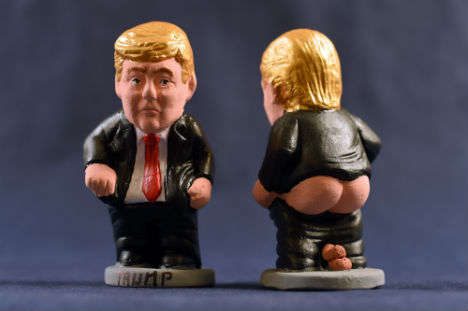
And a bit of a strange tradition in Catalonia is the caganer (the crapper), where a defecating figure perched behind Mary and Joseph is said to symbolize fertilization, as well as bringing luck and prosperity for the year ahead. The traditional figure is that of a young peasant from Catalonia, sporting a red cap and a pipe. But modern crappers represent public figures of the moment, from politicians to sporting heroes. Here is your Trump caganer that will probably be very popular this year.
Next up is EL GORDO! You can get your lottery ticket pretty much almost anywhere. El Gordo (The Fat One) is a Spanish institution and the second oldest lottery in the world. The first Christmas lottery took place on 22nd December 1812 in Cádiz and the event has been taking place on the same day every year since.
It’s a bit complicated because so many people take part in the lottery, numbers are repeated up to 160 times. That means, if you win, you will most likely be sharing the prize with 159 others.
The night of the drawing is a drawn out affair lasting around three hours. The balls are drawn in a unique way befitting the unique lottery tradition, while the numbers are sung by the pupils of Madrid’s San Ildefonso school.
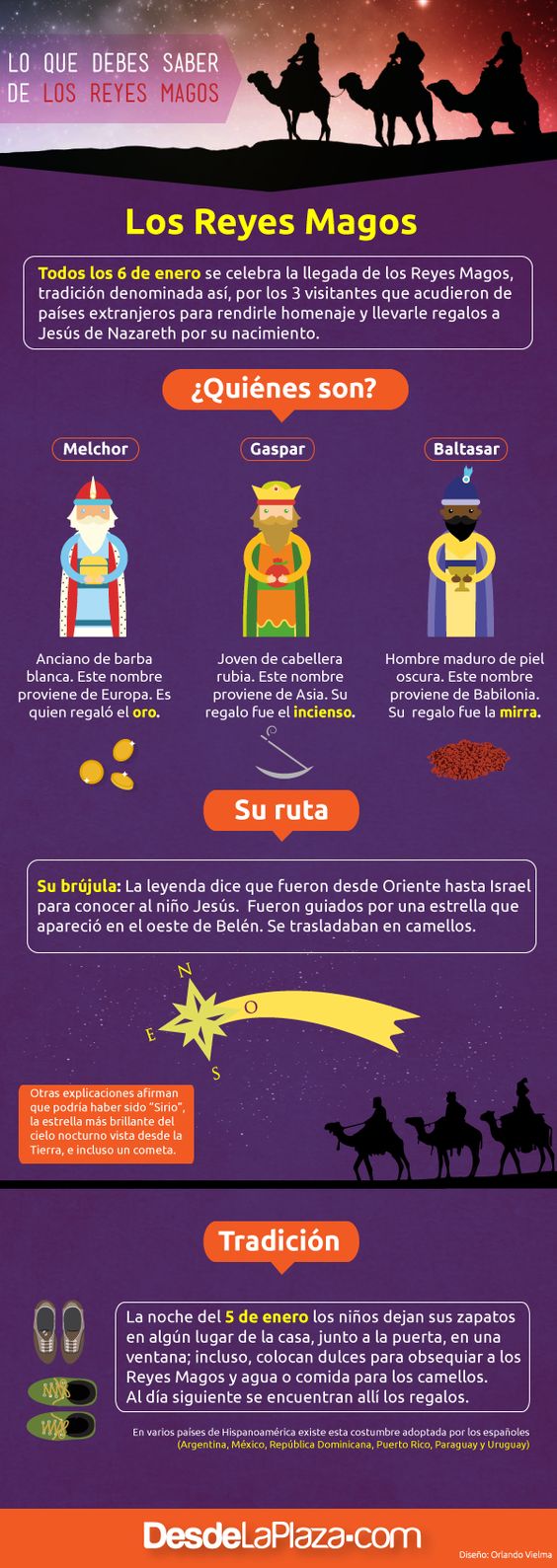
My next favorite Spanish fiesta is Three King’s Day (El Dia de los Reyes). If you remember the Three Kings are Balthazar, Caspar and Melchior and they bring the newborn Christ child gifts of gold, frankincense and myrrh. The one thing that really bothers me is how the person who portrays Balthazar is a Spanish who is blackened up. There are many African people who live here, who I am sure would be quite honored to play the role of Balthazar.
There are many parades around Spain with the Three Kings throwing candy to the children. Here in Mallorca, the Three Kings arrive on boat. There is also the Roscón de Reyes which is a traditional cake (a bit fruitcake like) that families eat on the day. Careful though, there is a metal/plastic figurine inside it. Whoever gets it in their piece is crowned king or queen of the table. There’s also a bean inside the pastry and whoever gets it has to buy next year’s roscón.
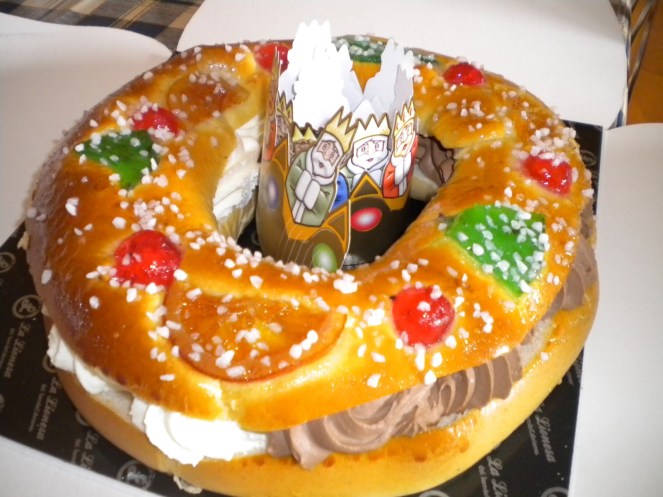
Good luck getting to be the king or queen of the party! Those are my favorites! What are some of your favorite holiday tradition where you live?

The day for Melchior, Gaspar, and Balthazar to arrive is here! Children are anxiously awaiting all over Spain to see the Three Kings. Known in the Anglophone world as the Epiphany, the arrival of the Three Kings is defined in Spain by the enormous expectation and the tremendous annual celebrations that revolve around the event. Festivities officially start the evening before Epiphany, on the night of January 5, when the Cabalgata de los Reyes Magos (Three Kings’ Parade) takes place in every town and city, with hundreds upon hundreds of people crowding the main roads of the urban settlements in order to get a glimpse of the reenactment of the arrival of the Three Kings into town.
Here in Mallorca, the Three Kings arrive on boat and then proceed to join the parade (either on an elaborate float or on camels or horses) to throw candy to the children that line the streets. The children hopefully have been very good all year because this is the time they receive the most presents. Santa is definitely number two in popularity in Spain. But if the children have been bad they receive a bag of black coal, (usually a lump of hard sugar candy dyed black, called Carbón Dulce).
If you haven’t realized it yet, the Three Kings are the Three Wise Men who traveled by night all the way from the farthest confines of the Earth to bring gifts to Jesus, whom they recognized as the Son of God. The two days remain a beloved tradition, the night before when the Kings arrive and January 6, the day of the Epiphany.
It is a special time here in Spain! But sadly, it is also the end of Christmas.
Til next time!
 GOING NINETY MILES