art · catalonia · church · Mallorca · see ~ mallorca

Robert Graves

Today, around one in four of the residents of Mallorca is a foreigner. Such a figure would have horrified the island’s best known 20th-century expat, the writer and poet Robert Graves.

When Graves first arrived on the island in 1929 it was already known as a desirable and unspoiled holiday spot in certain rarified artistic and moneyed circles, but few foreigners chose to actually live on Mallorca.

Graves, though, was after more than a break in the sun. He already had a reputation for his poetry, and his fiery, engaging personality and popular but intelligent writing made him famous at an early age. In 1929 he published Goodbye To All That, a sharply observed and lucidly written autobiography covering the period before, during and immediately after WW I. It was hailed as a classic. Yet Graves’s life at the time was a mess: he was unhappily married, broke and suffering shell shock.

The idea of leaving England for Mallorca was suggested to him by Gertrude Stein (who described it as ‘Paradise, if you can stand it’). He followed her advice, abandoned his wife and his four children, and with his lover, the American writer Laura Riding, he came to live in Deià. And Mallorca he found the peace and inspiration he needed to write, producing more than 120 books in his 90 years, including the historical novels I, Claudius and Claudius the God.

He also became famed as a literary exile, attracting a stream of celebrity visitors – Ava Gardner, Alec Guinness, Peter Ustinov, Gabriel Garcia Marquez and Kingsley Amis among them. Graves charmed them all and played wild practical jokes at the parties he hosted.

Graves was very much the Brit abroad – he liked the fact the Mallorca wasn’t far from the Greenwich meridian, was hot and cheap. But there is no doubt that the rural Mediterranean lifestyle suited him – he began to think of Laura Riding as an ancient Mediterranean moon goddess, until she left him for another writer in 1939. By then Graves was back in the UK, having left Mallorca in 1936, when Palma became a Francoist base for fighting during the Spanish Civil War.

Ten years later he returned to the island for good, this time taking Beryl Pritchard, who was to be his partner until his death. Mallorca’s influence on the Graves opus is oblique. The island’s climate, colors and the topography of its fig and citrus trees no doubt fed his imagination for the Roman works he wrote in Deià. Graves influence on Deià, however, is still huge.

A more personal legacy is the continuing presence of his family in the village – Beryl and three of their sons still live here. Every year on July 24th (Graves’s birthday), locals gather at Deià’s amphitheatre across the road for the Canellun to hear Graves’s family and friends read selection of his poetry, under the direction of the ‘keeper of the flame’, his daughter Lucia.

* the above was from my TimeOut book Mallorca and Menorca – pg 108 “Local Heroes Robert Graves”

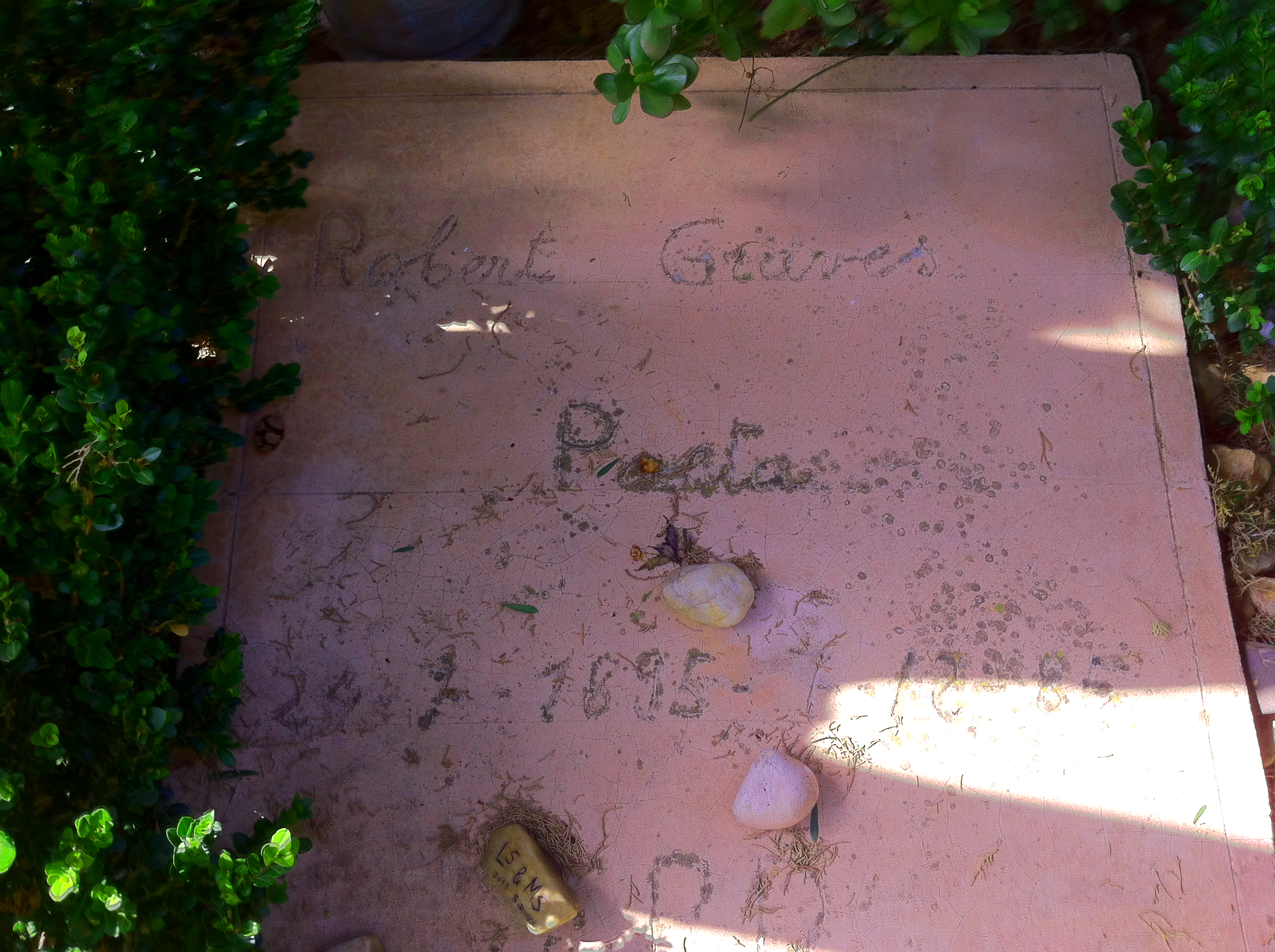
I have been wanting to visit the grave of Robert Graves for a long time now in Deià. Finally this weekend I hiked up to the churchyard at the top of the village to view it. And even with sweat streaming down my face, my back and pretty much everywhere else, I was thrilled to view the grave. A simple headstone which states: Robert Graves, Poeta, 1895 – 1985, EPD. EPD = En Paz Descanse ~ Rest In Peace.
rgg

Save

Save

architecture · church · Germany · love love love · Road Trip · travel

EPRT II Stralsund, Germany

Old warehouse in the Stralsund harbor. You can see Rügen Island in the distance.

The next day we drove about six hours from Wesel to Stralsund, Germany. One of the main reasons for our road trip to the north of Germany and over to Poland was for my Mom’s family tree research. She has been really into this for many years and has made amazing strides in finding out so much of her and my ancestral background. Go MOM!

So, Stralsund. Stralsund is a Hanseatic town in northern Germany. During its history, it had to defend its independence against Lübeck (Germany), Denmark, Holland and Sweden. In the Thirty Years’ War, General Wallenstein vowed that he would take the town even if it was chained to heaven – but he failed. Subsequently, Lower Pomerania stayed under Swedish rule for 200 years until 1815, when it became Prussian. Despite its turbulent history, 811 protected buildings survived in the old town, among them some truly remarkable examples of architecture.

The town’s largest church, St. Mary’s (Marienkirche), which was built in 1383 – 1473, with an octagonal tower for seeing great views of Stralsund.

I thought this Milchbar (Milk Bar) building was super cool. I took about a bizillion pics of it.

As I mentioned above, my Mom is trying to find out more about our family tree. She has traced my Great x5 Grandparents to a tiny village called Müggenhall – we drove through it and it was one street, maximum 20 very old homes. But we went to the next town over and we were able to meet with the minister (Der Pfarrer) in the town of Franzburg. He gave us many books to look through but we couldn’t find anything that had information with the names that Mom was looking for. Nonetheless, I think Der Pfarrer was happy with Mom’s 50 Euro contribution for giving up an hour of his time to dig out these old books for us to look at.

Besides going to Müggenhall we also went to a small village about 45 minutes from Müggenhall where my Great x5 Grandparents went to work as servants at an estate. It was bigger than Müggenhall and the homes were more cared for, obviously a village with more money. We scoured the graveyard for Schulzs and actually found a few. This one was my favorite, though a bit strange because it was so small and on top of another cross. Was it a child?

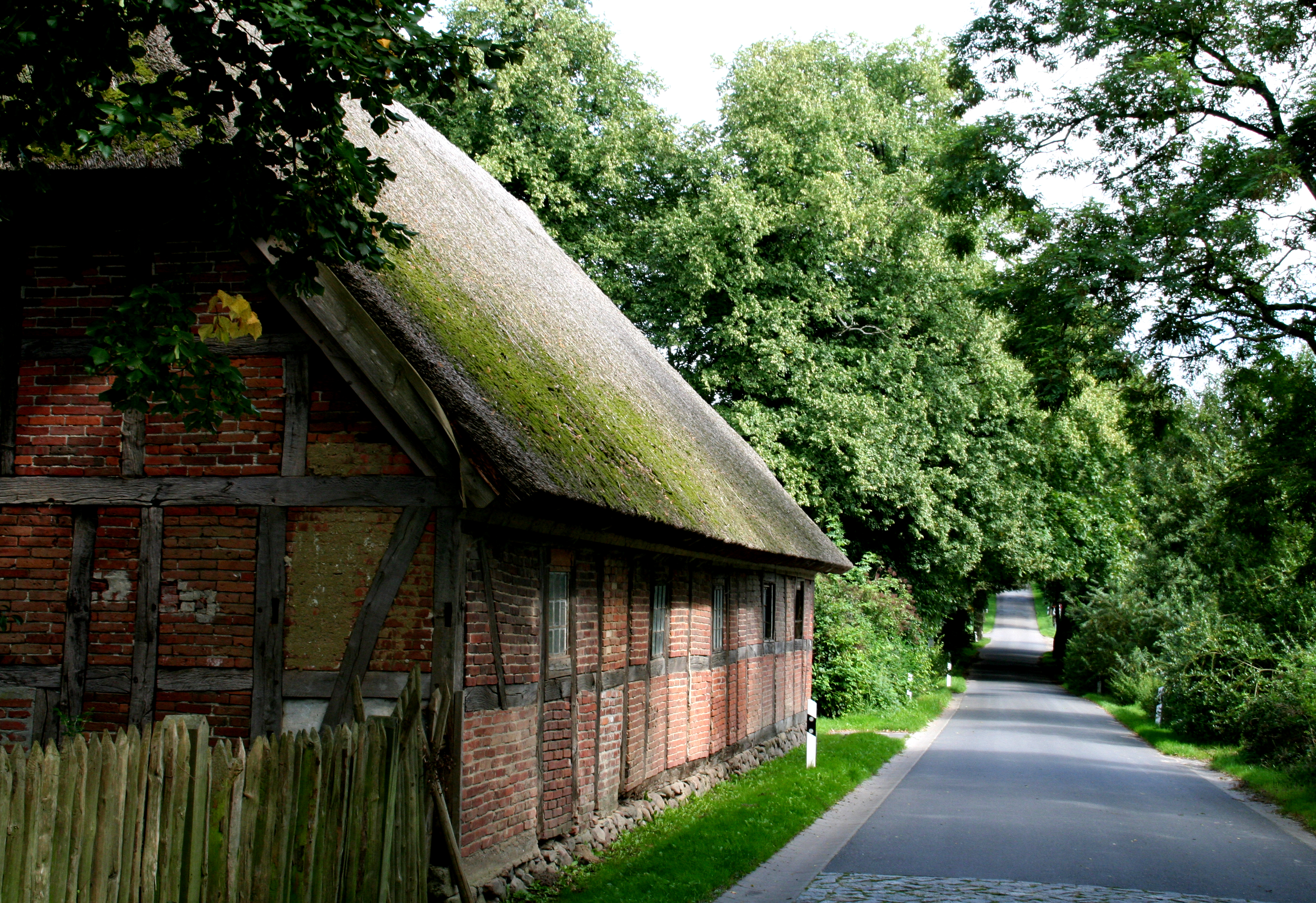
And my obsession with graveyards continues…. with a new post! There was a large home with a farm and more that quite possibly could have been where my great great great great great (whew!) grandparents worked. Here was my favorite building from there, love the thatched roof!! Maybe my Gx5GP (please tell me you get that) slaved away in there making cheese or washing laundry or sneaking away for a nap.

Looks like a perfect place for a snooze. Zzzzzzzzzzzzzzzzzzzzzzzz…

Save

2011 · beauty · church · cool photos · familia · Germany · Road Trip

Kerzenkappelle Kevelaer

Kevelaer is a municipality in the district of Kleve, in North Rhine-Westphalia  in Germany.  It is the best visited Catholic pilgrimage location within north-western Europe. More than 800,000 pilgrims, mostly from Germany and the Netherlands,  visit Kevelaer every year to honour the Virgin Mary.

This was one of the first stops for the Europe Parent Trip II Part One (could I make it any more confusing). Hundreds of lit candles of all sizes were in front of this chapel of the candles (kerzenkapelle). BEAUTIFUL! Plus a small shrine is built close by for the faithful to come and pray for healing.

My parents and I are still hitting the streets! My aunt and uncle arrive tomorrow, but I am back and posting now all of the gory details. Don’t forget to come back to check ’em out. Germany, Poland, Mallorca, Barcelona all coming to a blog near you.

Save

animals · church · Germany

Sauerbraten und Knödel

Last weekend I flew with Air Berlin, Mallorca to Frankfurt. Three things I am fond of when flying within the EU: the free magazines and twilnewspapers you get to choose from when entering the plane (that you will be stuck in with crying children, fat people sitting next to you who obviously did not take a shower from their last dip in the Sea and seem to still be dripping wet – eewww, or a group of teenagers who like to punch each other and sing songs because they are still drunk from their S’Arenal drinks garnished with four foot fluorescent straws).

Where was I? Right, things I enjoy when flying. Actually the only thing I really enjoy about flying is viewing the scenery below; Lake Geneva, the Alps in the distance, the green and yellow squares of farmland, my forehead is usually mashed to the window delighted with the sights. But the magazines, duty free shopping and Germans clapping after we have landed seem to make it a tad less aggravating.

People watching is fun too. God, do I love to stealthfully spy on our human race. Such fun! Though I try not to be an ass about it, I keep a legal distance and would never totally do a dead on stare. I do have my limits. geez. Granted, doing this while at the beach or in Palma drinking a cold beer is so more relaxing and enjoyable than the airport, but since I have to be here anyways…..

Germany was a whirl of Deutsche Spaß – we hung out with The German’s family and his new three week old niece (so cute), checked out a cool townhouse in Wesel, finally watched Twilight with Robert hotvampire Pattinson and took a walk to the top of the hill, sat on a bench and looked out over cloudy Detmold. I think I saw the sun for a total of thirty minutes on this trip. And while I never got the chance to wear my new summer dress from Mango I did get to break in my new Les Halles destroyed jeans by wearing them EVERY day. Classy, I know. But I love them.

180px-Paderborner_Dom_Dreihasenfenster
Dreihasenfenster

We also hit up a steakhouse in Paderborn with friends and then went to see the famous window in the church across the cobblestone street. I don’t think you can go wrong with any church in Europe, they all seem so much more breathtaking and religious than any church I have ever been to in the U.S.A. Wait, I take that back – St Patrick’s Cathedral is beautiful. Okay, okay, I can think of a few more cathedrals in the land of glory but you know what I mean.

We hopped into the Paderborner Dom to see the Dreihasenfenster (that’s German for Window of Three Hares). It depicts hares (rabbits, bunnies, call them what you will) in motion, laid out in a triangle. Each wascally wabbit is shown as having two ears, although only three ears are visible in total. Cool, yes?

Somehow I always manage to learn a new obscure German word whenever I am in the country of wienerschnitzel. Before having steak I was told Lady Gaga showed accidently/on-purpose a/her little schniedelwutz. I think you can get what I am talking about, but it does mean a very VERY small one. Is that true? That is kind of a gross publicity stunt Lady Gaga but Das Bild declared it to be true, so it must be. Schniedelwutz.

And I learn another word. And have lost my appetite.

Save