beauty · ireland · Road Trip · travel

Newgrange

The next day was Newgrange in County Meath, Ireland. Because of time constraints, I had looked into the places my mom wanted to go to, but never into much extent. So I was usually pleasantly surprised when we arrived to these sites, they were so interesting. Newgrange was the first of these stops.

Newgrange is a UNESCO World Heritage Site, which means it is a place (such as a forest, mountain, lake, island, desert, monument, building, complex, or city) that is listed by the United Nations Educational, Scientific and Cultural Organization (UNESCO) as of special cultural or physical significance. It is one of the two UNESCO sites in Ireland. Newgrange is also called Brú na Bóinne.  It is a prehistoric monument in County Meath, Ireland, about a 30 minute drive from Dublin.  It was built during the Neolithic period around 3200 BC, making it older than Stonehenge and the Egyptian pyramids! The site consists of a large circular mound with a stone passageway and interior chambers. The mound has a retaining wall at the front and is ringed by engraved kerbstones. There is no agreement about what the site was used for, but it has been speculated that it had religious significance – it is aligned with the rising sun and its light floods the chamber on the winter solstice.

There is no direct public access to Newgrange by road. Visitor access to Newgrange is only by guided tour from the Visitor Centre on the south side of the river Boyne. Newgrange is on the north side of the river Boyne, visitors cross the river by pedestrian bridge and take a shuttle bus to Newgrange. Tickets are sold at a first come, first serve basis and we were told to arrive early as tours do sell out. We arrived at 10 a.m. and had no problem with getting tickets. Adults are 6 euros and children are 3 euros.

IMG_0150

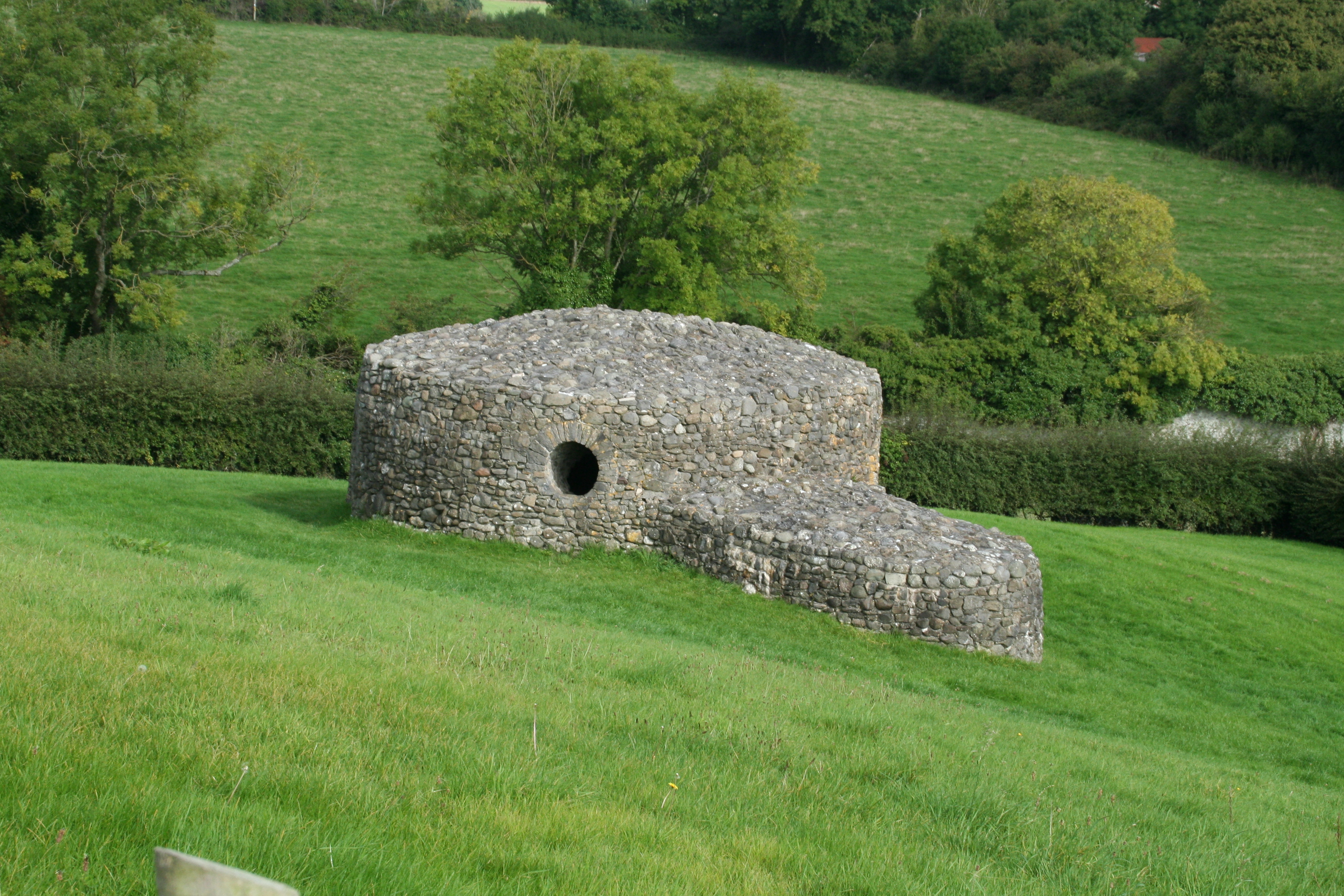
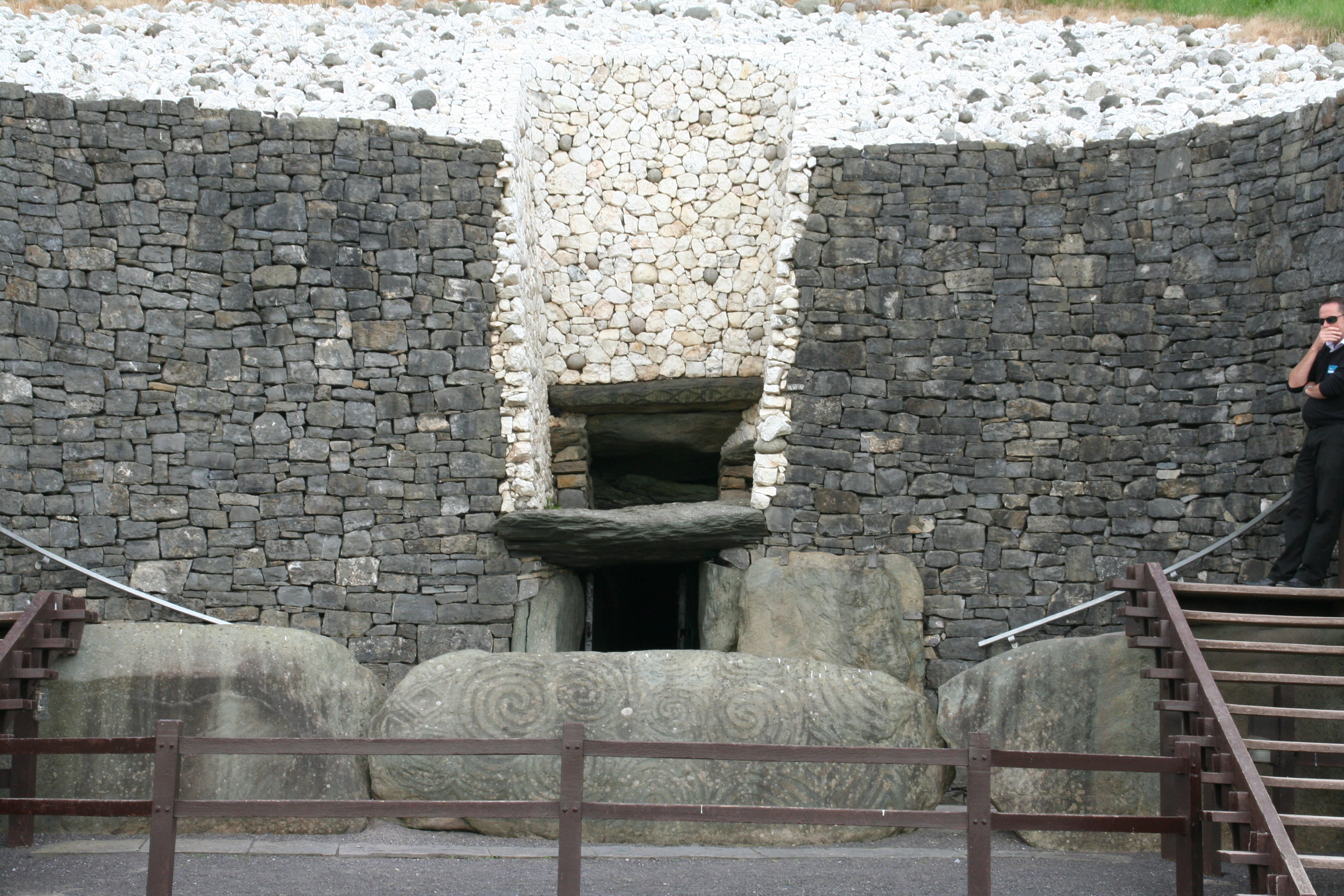
Aren’t my parents adorable? 🙂 There behind them is the circular mound and within the mound is a chambered passage, which can be accessed by an entrance on the southeastern side of the monument. The passage stretches for 19 metres or about a third of the way into the center of the structure. At the end of the passage are three small chambers off a larger central chamber, with a high corbelled vault roof. Each of the smaller chambers has a large flat “basin stone”, which was where the bones of the dead were possibly originally deposited, although whether it was actually a burial site remains unclear.You can’t take pictures inside but here is one of the entrance.
IMG_0138

Do you see that large stone in front? Newgrange contains various examples of abstract Neolithic rock art carved onto it which provide decoration. These carvings fit into ten categories, five of which are curvilinear (circles, spirals, arcs, serpentiniforms and dot-in-circles) and the other five of which are rectilinear (chevrons, lozenges, radials, parallel lines and offsets). They are also marked by wide differences in style, the skill-level that would have been needed to produce them, and on how deeply carved they are. One of the most notable examples of art at Newgrange is the triskele-like features found on the entrance stone. (See above pic) It is approximately three metres long and 1.2 metres high, and about five tonnes in weight. It has been described as “one of the most famous stones in the entire repertory of megalithic art.  Archaeologists believe that most of the carvings were produced prior to the stones being erected in place, although the entrance stone was instead carved in place before the kerbstones were placed alongside it.

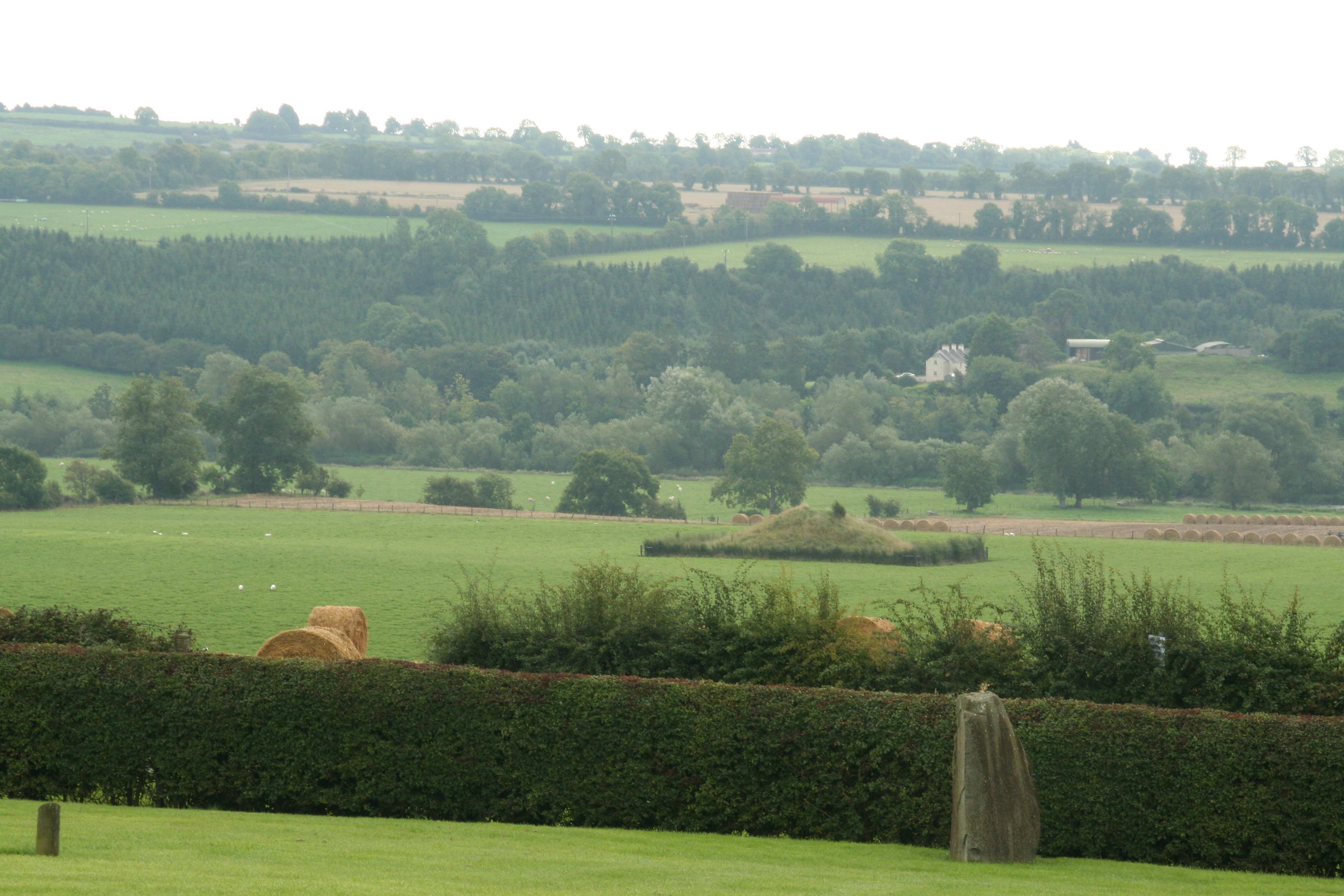
Check out the kerbstones, the Neolithic art, the possible tombs surrounding the mound and the structural slabs in the next few pictures. What was amazing to me was that geological analysis indicates that much of building materials used to construct Newgrange were littoral blocks collected from the rocky beach at Clogherhead, County Louth, approx. 20 km to the north-east. The blocks were possibly transported to the Newgrange site by sea and up the River Boyne by securing them to the underside of boats at low tide. Can you imagine? Remember this began around the year 3200 B.C. I was astounded.
 

IMG_0135

IMG_0140

IMG_0143

IMG_0145

IMG_0148

I hope you enjoyed this post as much as I enjoyed seeing this place. It is a mysterious and fascinating site! I hope you will one day see it too. Until the next post, CHEERS!
Save

Save

Save

2014 · familia · ireland · Road Trip · sporty · travel

DUBLIN

Hello fellow readers! I returned from visiting the green island of Ireland a few weeks ago. I hope to take you through every area we visited in my next few posts. So keep in touch.

First of all, the Irish people are THE NICEST people I have ever met. I have traveled a lot (not to brag, but I have done a decent share – but that said, so much more still to see) and I have never had such a pleasurable experience with the people of a country. Not a single rude person. Everyone was friendly, helpful and most of all, funny. It was such a fantastic trip.

Let me just preface that I was traveling with my parents, not that THAT is bad! I just wanted you to know who I was with on this adventure. I love my parents and we had a lot of fun. Since moving to Europe ten (!) years ago, I have traveled with my parents a lot on this side of the pond.

So, let’s get down to it. Flying from Mallorca to Bilbao to Dublin I landed around 5:00 pm at the Dublin airport. And my first experience with Aerlingus. Nice airline – they had leather seats throughout the entire aircraft! And of course, friendly. Then I had to pick up the rental car from Hertz. And this was my first experience of the steering wheel on the other side and driving on the other side of the road. My parents had landed earlier in the day so they were already at the hotel. It was me and the rental car driving on the wrong side of the road together. YAY! Already friends.

Finally arrived at Clontarf Castle and went up to the room. Dad was still sleeping and mom was getting ready for dinner. We unpacked, talked about the trip to Dublin and went down for dinner in the hotel restaurant. Good food, good service and guess what – friendly people everywhere!! What is in the water? And can I get some shipped to the island of Mallorca?

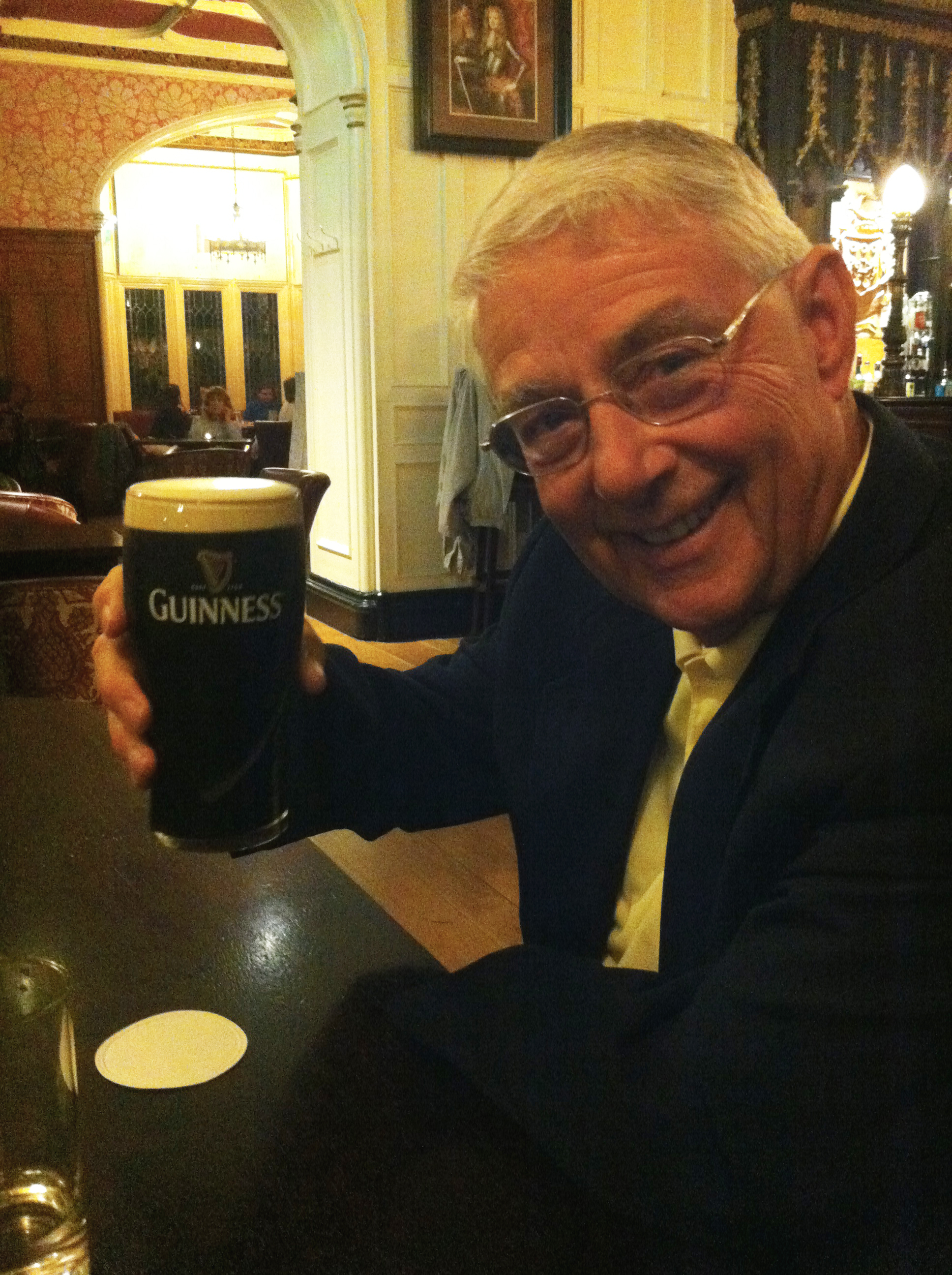
Dad and I started off with a Guinness. Because if you are in Ireland, you drink a Guinness!! And by the way, have you tried Guinness with black currants!? DO IT NOW. You can thank me later. The most deliciousness of Guinness you will ever have. Yo.

g isgood

We called it an early night because we had to begin the day around 8 a.m. (pretty much every morning for the rest of the week). I did like that we each had our own single bed. Usually when it is three people one person gets totally shafted and has to sleep in that crappy cot (extra) bed. You know what I am talking about, right? And it really sucks. And is really uncomfortable. And it is always ME that has to take this bed because I am obviously the youngest – but not that young!! But here at the Clontarf Castle we each had a lovely single bed. A good nights sleep if only my dad didn’t snore!

DAY TWO: Hop On – Off (HOHO) Bus in Dublin. Some people don’t like these buses but it is an easy way to see the city without paying too much money. Just as the name states, you can get on and off when and where you like and walk around for as long as you want and then get back on. Of course, keeping with the bus time schedule. I think they start around 9 a.m. and end around 8 p.m.

Clontarf Castle has a free shuttle early around 8 a.m. But we wanted breakfast and then took a taxi took the HOHO Bus. The first place we got off was Trinity College. It is one of the seven ancient universities of Britain and Ireland, as well as Ireland’s oldest university. It was originally established outside the city walls of Dublin in the buildings of the dissolved Augustinian Priory of All Hallows, Trinity College was set up in part to consolidate the rule of the Tudor monarchy in Ireland, and it was seen as the university of the Protestant Ascendancy for much of its history. Trinity College is now surrounded by Dublin and is located on College Green, opposite the former Irish Houses of Parliament. The college proper occupies 190,000 m2 (47 acres), with many of its buildings ranged around large squares and two playing fields.

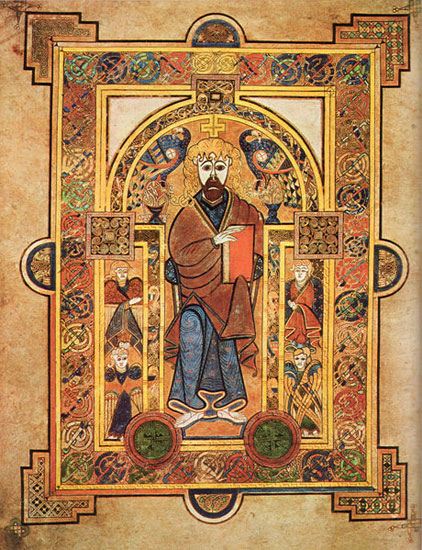
The main reason we stopped at Trinity College was to see the Book of Kells. This book is believed to have been created ca. 800 AD. Amazing, right!? The Book of Kells is an illuminated manuscript Gospel book in Latin. It contains the four Gospels of the New Testament together with various prefatory texts and tables.  The manuscript today comprises 340 folios and, since 1953, has been bound in four volumes. The leaves are on high-quality calf vellum, and the unprecedentedly elaborate ornamentation that covers them includes ten full-page illustrations and text pages that are vibrant with decorated initials and interlinear miniatures and mark the furthest extension of the anti-classical and energetic qualities of Insular art.

While they had two books on display (under bullet-proof glass) it was difficult to see with the amount of people trying to crowd in and look …. for hours. But I did get a peek and it was beautiful. A picture from a page in the Book of Kells from educationscotland.gov.uk.

bookofkellsL_tcm4-553619

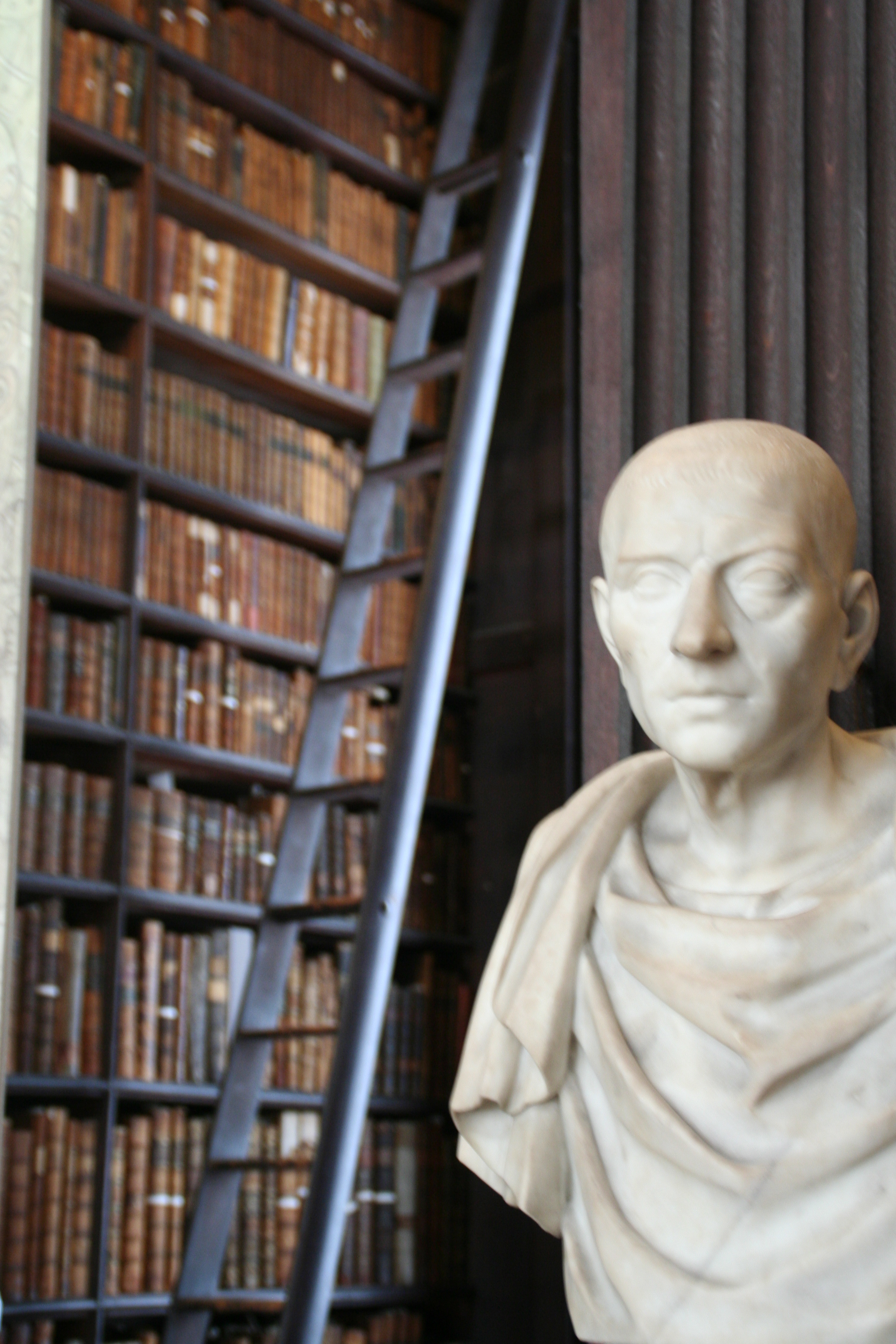
.Connected to the area to see the Book of Kells is the Long Room. The 65-metre-long (213 ft) main chamber of the Old Library, the Long Room, was built between 1712 and 1732 and houses 200,000 of the Library’s oldest books. This was actually my favorite part of Trinity College. While the Book of Kells was so interesting and beautiful it also had so many people wanting to see it, read about it, learn every single thing possible. The long room was more calming and just so many books! My heart was happy.

IMG_0035

IMG_0054

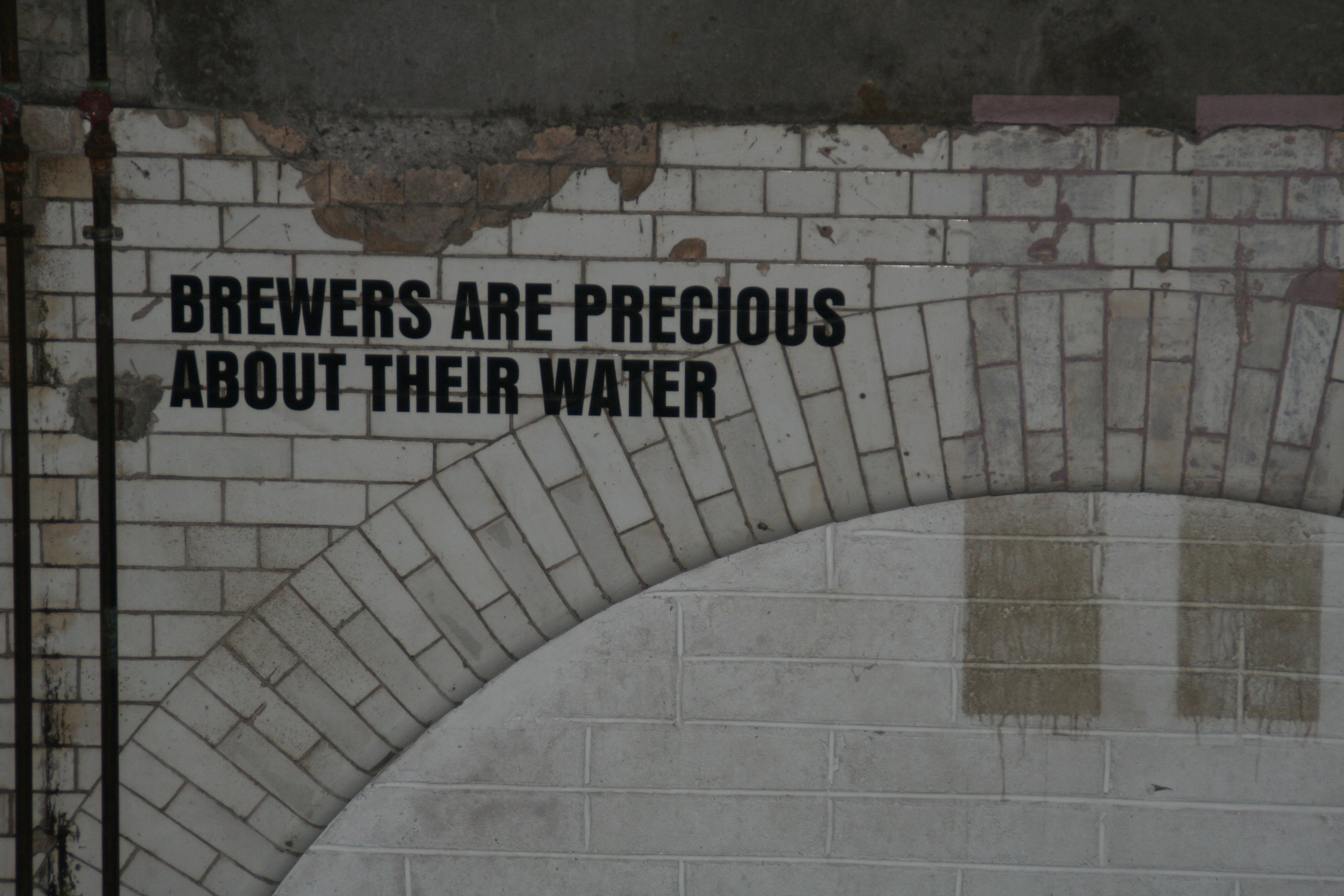
Back on the bus! We drove past tons of gorgeous places – St. Stephen’s Green, St. Patrick’s Cathedral, the Dublin Zoo in the huge Phoenix Park. But then our next stop was the Guinness Storehouse. Did I mention the Irish people were friendly and funny? While leaving our guide mentioned to all getting off that the last pick-up from Guinness was at 8 p.m. Hilarious. 🙂 I thought we would be able to just go straight to the Gravity Bar at the top but you must buy a ticket to go there. Adult tickets are 18 euros each and you get a ticket for a free pint of Guinness at the Gravity Bar. The self “tour” was fine, interesting if you want to know how they make Guinness. We went through it pretty quickly and headed to the top. Here you can receive your free (with your ticket) pint of Guinness and look out over all of Dublin. Great views!

IMG_0080.

Our last stop was Temple Bar. Not really to see the area – because it is mostly bars and retro clothes shops. Which if that is your thing, this is your stop! But there was a big hurling game happening and we wanted to check it out. What is hurling, you may ask? What you DON’T know!? What planet are you living on!? Okay, kidding. We had no idea but there was a big game and our taxi driver told us all about it. Hurling is called the fastest game on grass.

The objective of the game is for players to use a wooden stick called a hurley to hit a small ball called a sliotar between the opponents’ goalposts either over the crossbar for one point, or under the crossbar into a net guarded by a goalkeeper for one goal, which is equivalent to three points. The sliotar can be caught in the hand and carried for not more than four steps, struck in the air, or struck on the ground with the hurley. It can be kicked or slapped with an open hand (the hand pass) for short-range passing. A player who wants to carry the ball for more than four steps has to bounce or balance the sliotar on the end of the stick and the ball can only be handled twice while in his possession. It was a lot of fun to watch and to try to understand what exactly was happening. The big game was between two rivals Kilkenney vs. Tipperary. And it ended in a tie, something that is very unusual I was told.

IMG_0108

.Flags flying for their/your favorite team. That concludes my first day of Dublin post. I hope you enjoyed it. Next up is Newgrange and surrounding area of Dublin. Please check it out. Good night!

Save

Save

animals · beauty · birds · cool photos · Germany · love love love · poland · Road Trip · save our world

Brought to you by the Klapperstorch

Der Klapperstorch or the White Stork to us English speaking folks. It is called der Klapperstorch in German because of the sound it makes with its beak. The adult White Stork’s main sound is noisy bill-clattering, which has been likened to distant machine gun fire. The bird makes these sounds by rapidly opening and closing its beak so that a knocking sound is made each time its beak closes. The clattering is amplified by its throat pouch. Used in a variety of social interactions, bill-clattering generally grows louder the longer it lasts, and takes on distinctive rhythms depending on the situation—for example, slower during copulation and briefer when given as an alarm call. Like the adults, young also clatter their beaks.The up-down display is used for a number of interactions with other members of the species. Here a stork quickly throws its head backwards so that its crown rests on its back before slowly bringing its head and neck forwards again, and this is repeated several times. The display is used as a greeting between birds, post coitus, and also as a threat display. Breeding pairs use this display, as well as crouching forward with the tails cocked and wings extended.

Wouldn’t that be awesome if humans used those behaviors to show greetings, or post coitus or when threatened? Your mate throws his head back and forth showing pleasure from the moment – or when greeting his best friends? Doesn’t  matter which, it is all the same emotion.

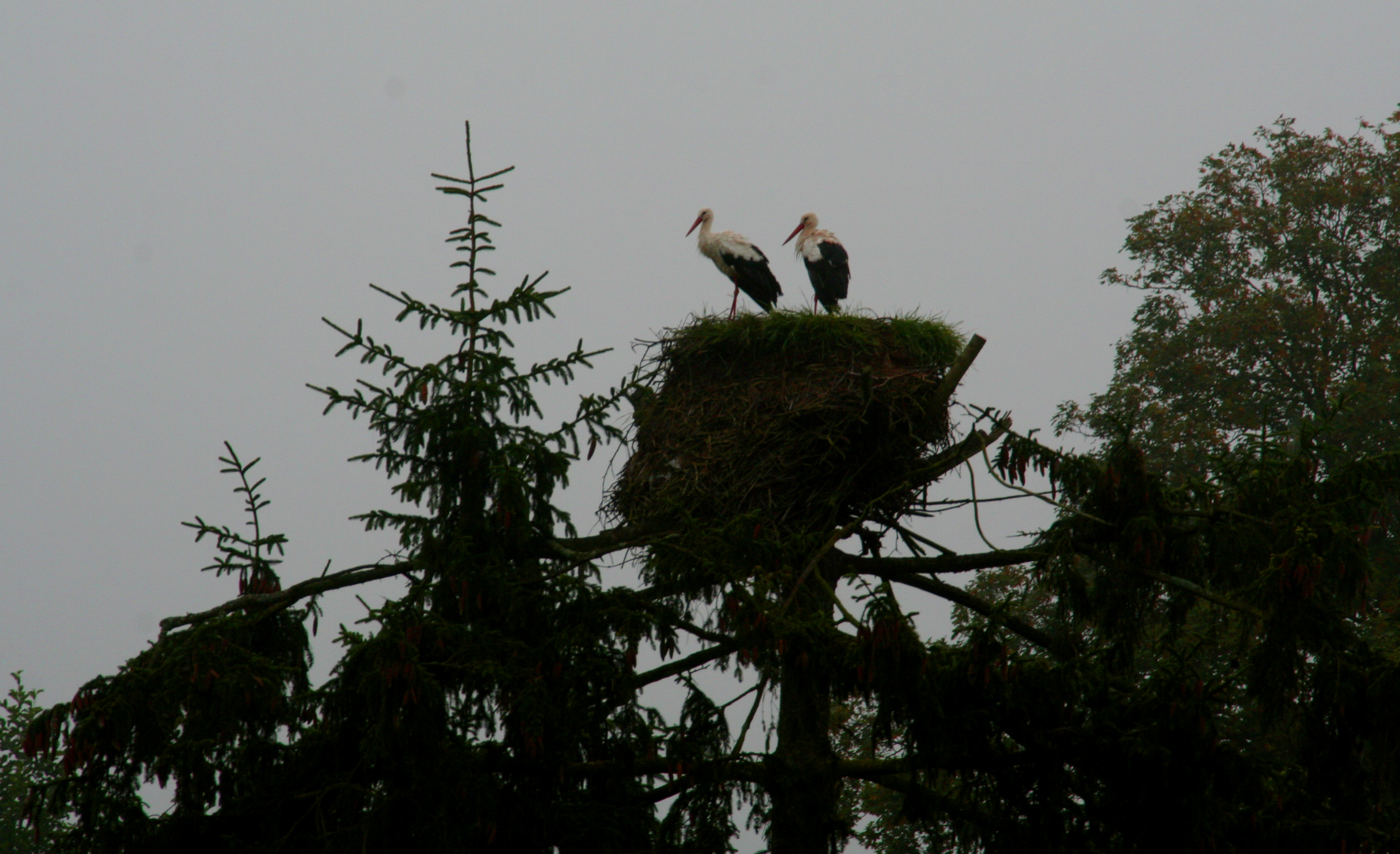
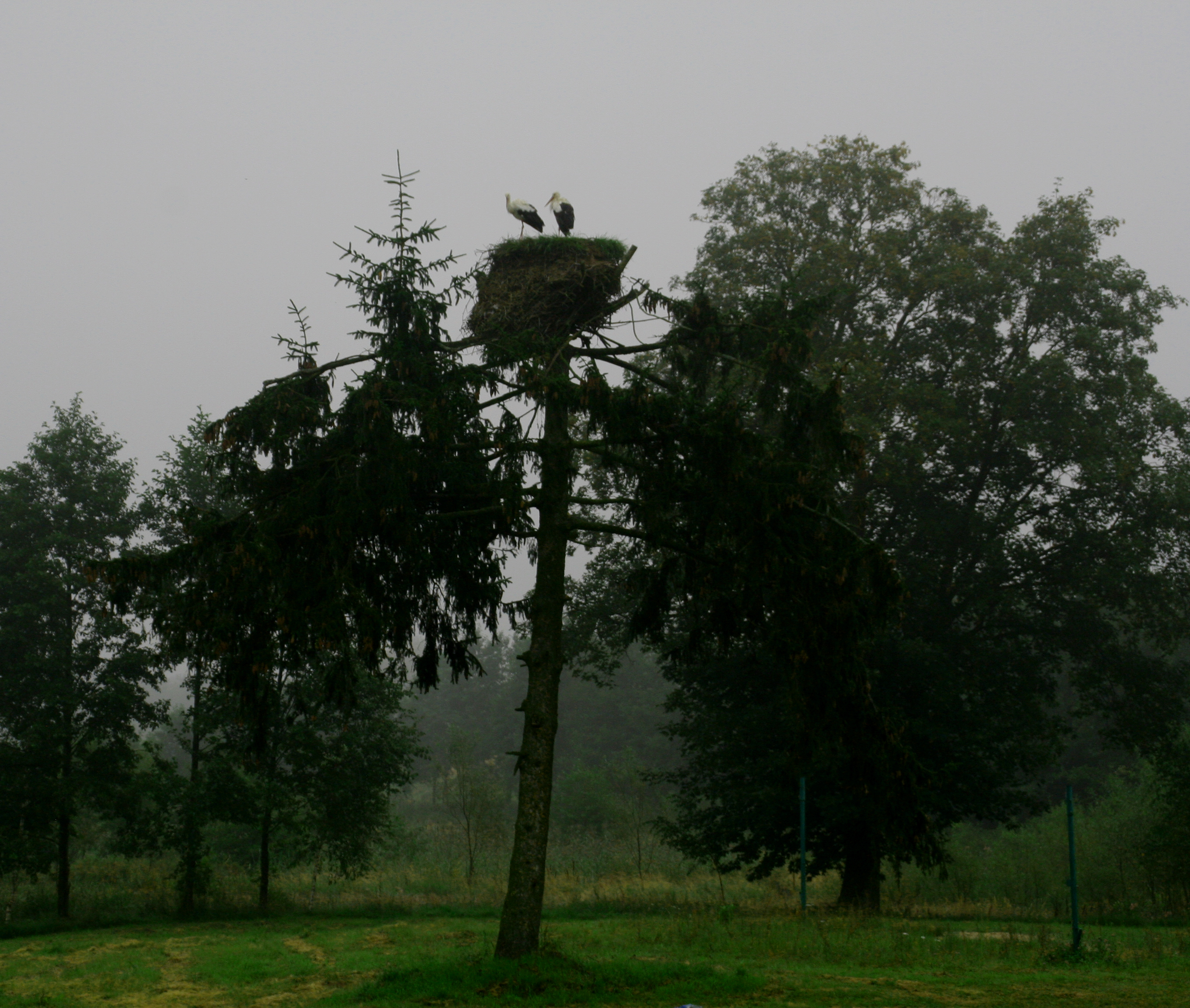
Back to the birds. When my parents and I were leaving Poland my mom shouted (way too early in the morning), “Did you see that?!”. I flipped the car around and lo and behold there was this stork nest!! Have you ever seen a nest with storks in it? The nest was huge and these two adorable (yes, adorable) storks just hanging out.

The White Stork breeds in open farmland areas with access to marshy wetlands (this nest was next to a large pond), building a large stick nest in trees, on buildings, or on purpose-built man-made platforms. Each nest is 1–2 m (3.3–6.6 ft) in-depth, 0.8–1.5 m (2.6–4.9 ft) in diameter, and 60–250 kg (130–550 lb) in weight. Nests are built in loose colonies. Not persecuted as it is viewed as a good omen, it often nests close to human habitation; in southern Europe, nests can be seen on churches and other buildings.

I had noticed these large nest of twigs, mostly on top of homes, where the chimney was, I wondered why they would leave the nest there, because you cannot use your chimney with a stork nest on top of it. But since the storks do migrate to Africa in the winter maybe they would take the nest down when the migrated? And put it back when it was spring? Not sure, but once I first saw them, I noticed the nests everywhere.

Storks!! They bring babies, have you heard? According to northern European legend, the stork is responsible for bringing babies to new parents. The legend is very ancient, but was popularised by a 19th century Hans Christian Andersen story called The Storks. German folklore held that storks found babies in caves or marshes and brought them to households in a basket on their backs or held in their beaks. These caves contained adebarsteine or “stork stones”. The babies would then be given to the mother or dropped down the chimney. Households would notify when they wanted children by placing sweets for the stork on the window sill. From there the folklore has spread around the world to countries such as the Philippines and South America.

Save

familia · poland · Road Trip · travel

Now We Go To Poland, eh?

Ah, that headline sounds more Russian, no? Which reminds me of this movie clip I keep seeing with Anna Farris (love her). In the movie, What’s Your Number, there is a scene where she runs into an ex-boyfriend who is British and apparently he thinks she is British too. Until she can’t keep up with the accent and breaks out into a Russian accent saying, “What do you say, a little dancing, eh?” Makes me laugh every. time.

POLAND! I wish walls and trees and roads could talk. Lots of wars here. There was such a drastic difference between Germany and Poland. While Poland is clean and the people seem happy the buildings, roads, cars, fashion all seem a bit stuck. The buildings are mostly bland, grey concrete or just older and a bit rundown. The roads are bumpier, smaller and people just pass when they want. A car in the opposite lane would pass a car in front of it with me coming straight towards them. Everyone just moves as far to the right so literally three cars can pass each other at once. And all of the buses looked they were from 1970.

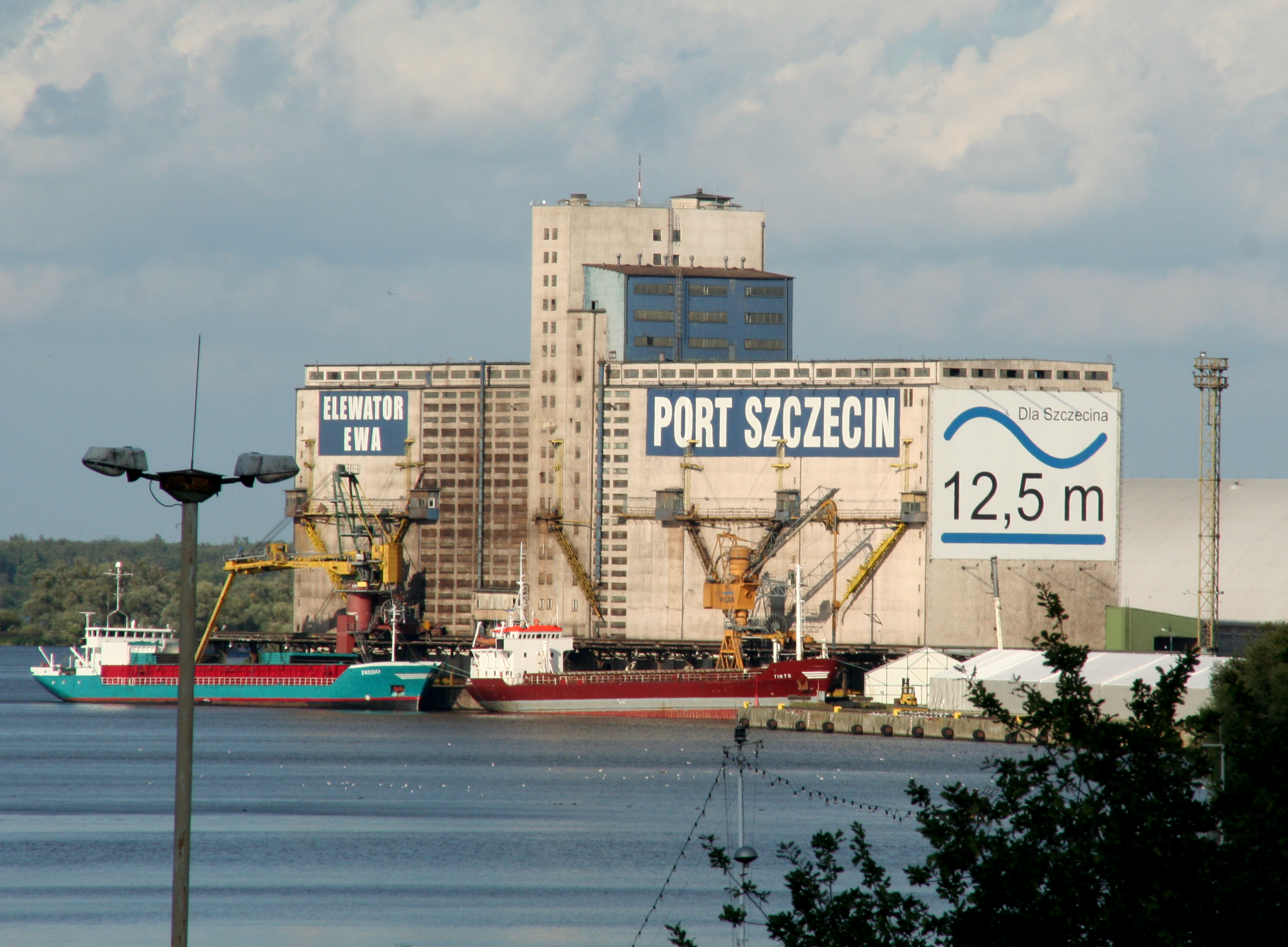
Nevertheless, I had a lovely time in Poland. Szczecin was first stop.

Our main reason for stopping here was so mom could find more information on her (my) relatives. She made a contact, his name was Marek, and he helped her by speaking to the office that holds all of the registry books. We were able to see books documenting marriages, births, deaths anywhere from the year 1800 – 1920. We would have never been able to look at these books without Marek’s help. The Polish people don’t speak much English and even if they did Marek had to fight a bit to allow the clerk to let us see them.

So the three of us; my mom, my dad and myself poured over these books for several hours. It took awhile to get used to handwriting and exactly what you were looking at; whether it was a marriage or a birth, etc. And anything that had the name Schultz or Müller was something to write down for mom to go through later to see if anything matched. My mom actually found the something she had already known about, her great great great grandparents wedding but to see it written down in this book was an inspiring thing indeed.

After about five hours of researching we finally were finished with what we could find. We did a bit of sightseeing and we were again on our way, deeper into Poland towards the town of Bytow.

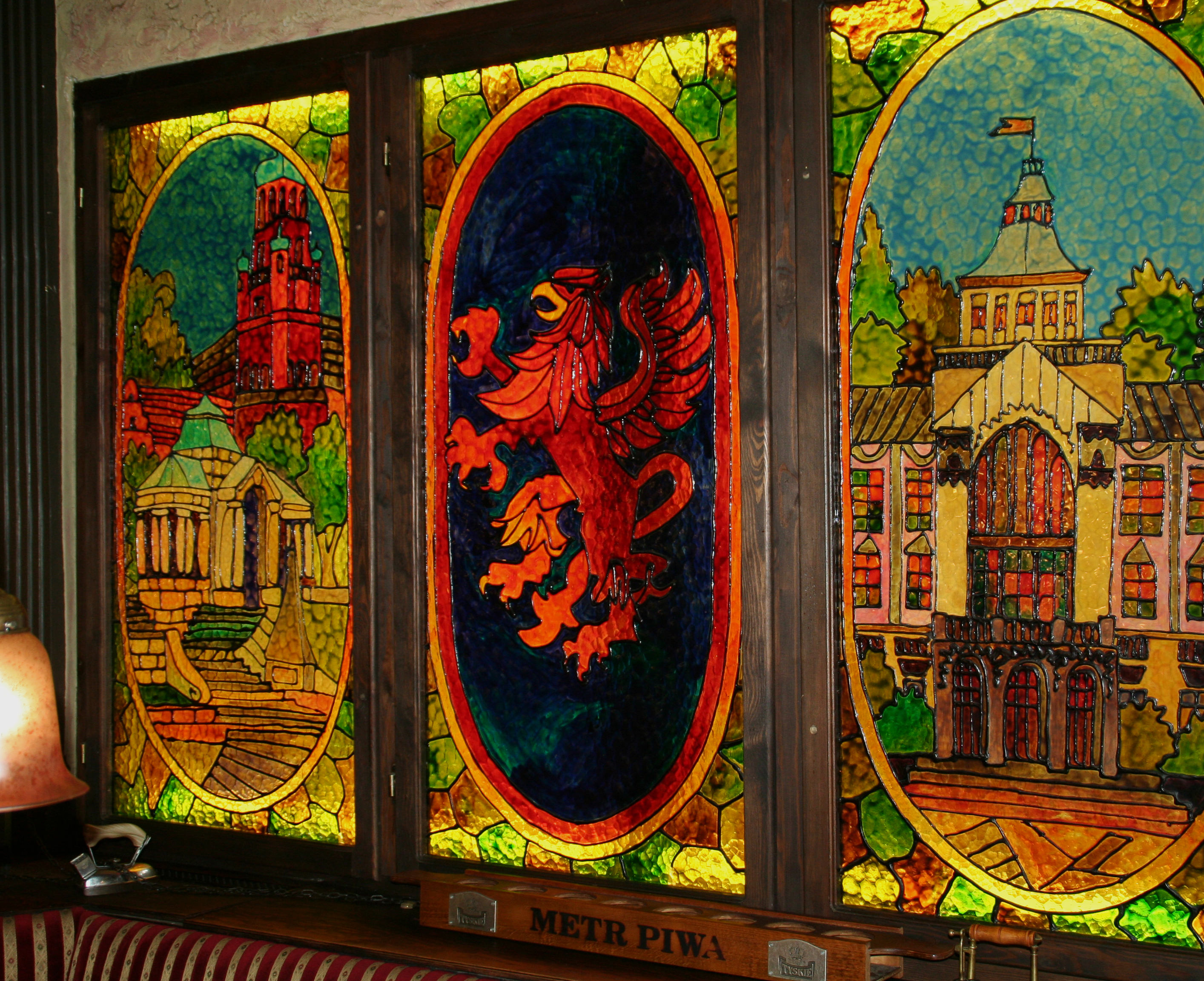
Saw the Prussian eagle everywhere
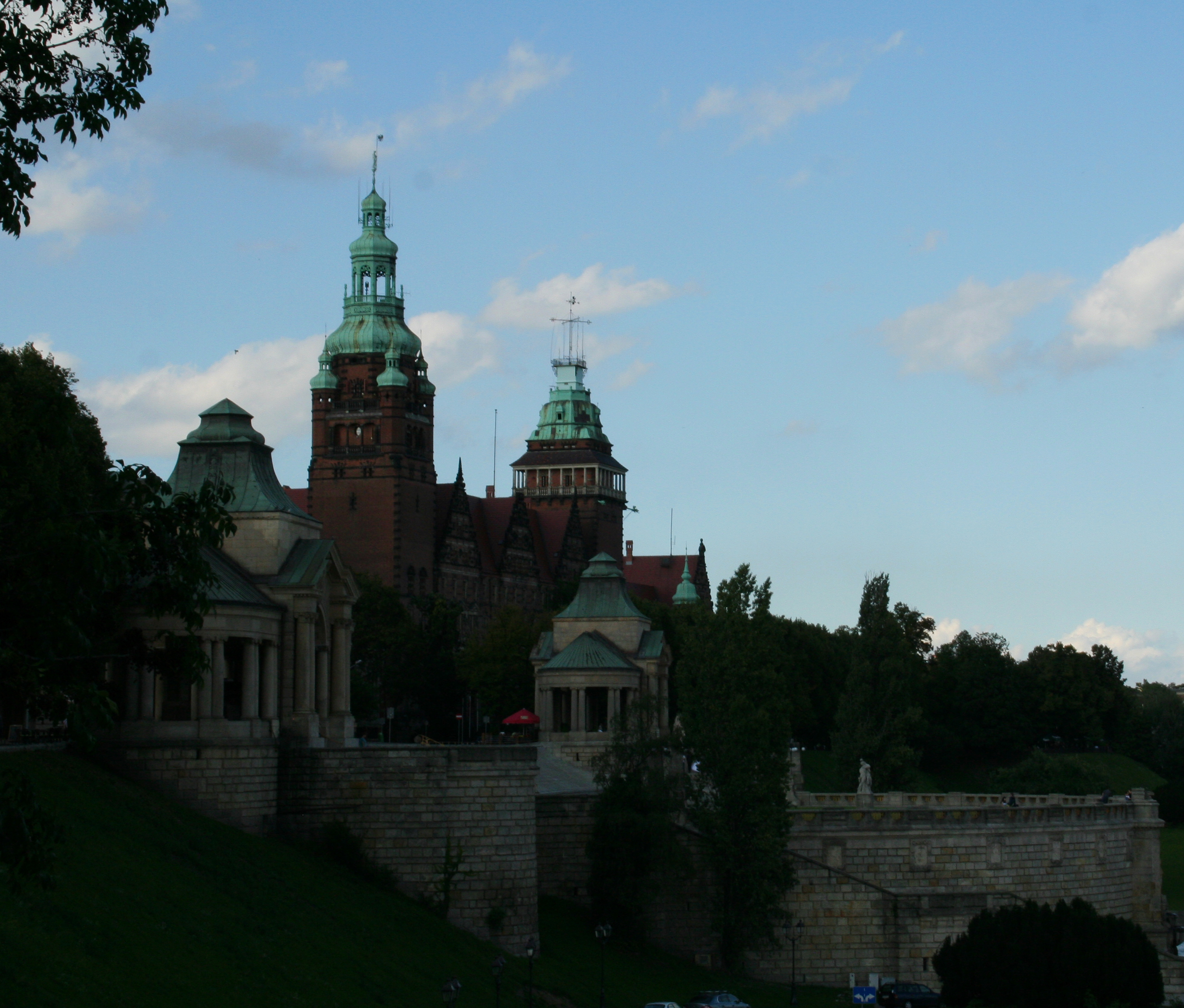
So many beautiful and very old buildings here in Szczecin

Save

beach · beauty · familia · Germany · love love love · Road Trip · travel

EPRT II Rügen Island, Germany

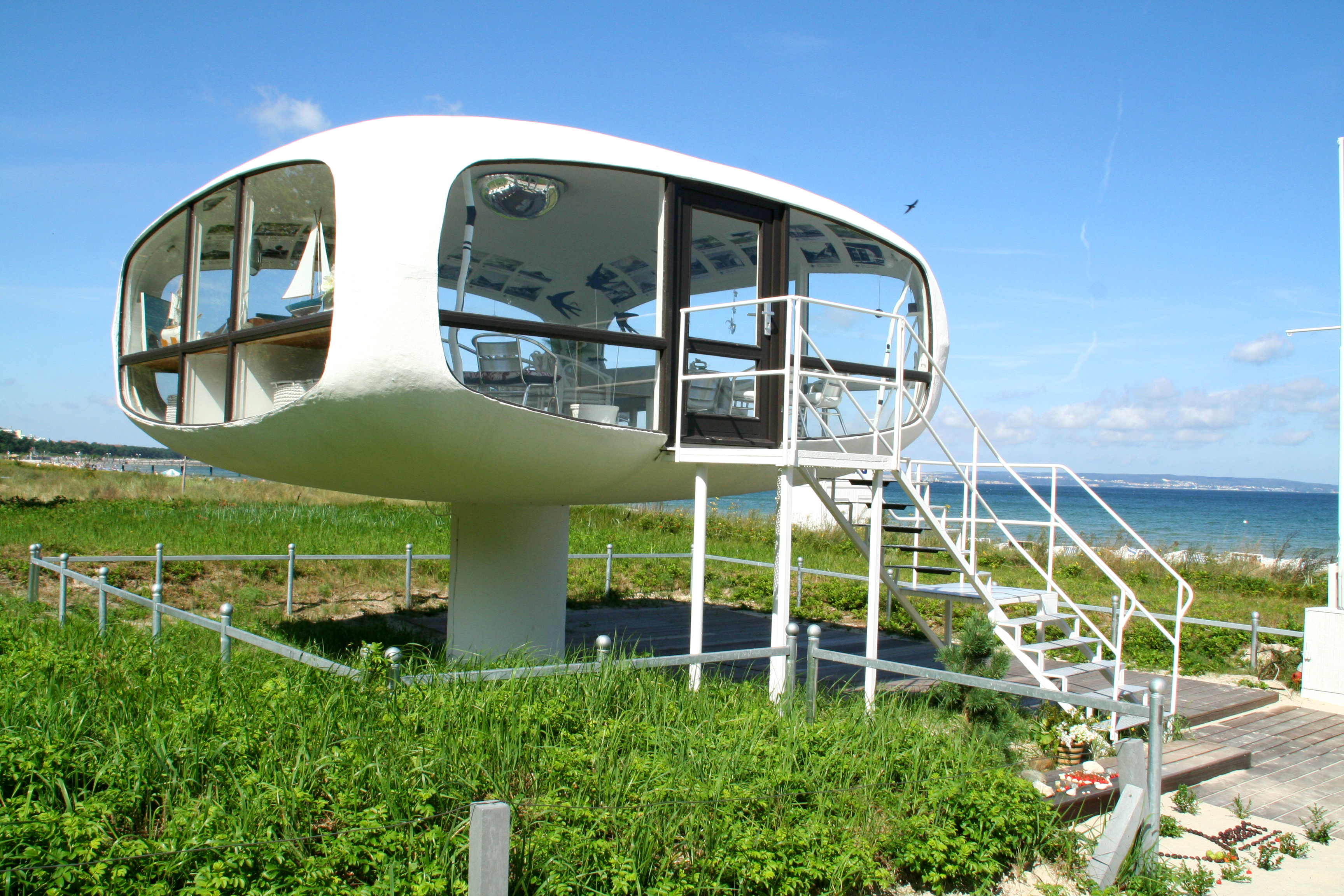
I do believe this is my favorite picture from all that I took on our three week trip. I thought it was some kind of modern beach house but what little information I could find is it’s a lifeguard station. This is in Binz, Rügen Island, Germany. It was built in 1968. Isn’t it like, totally awesome dude?! I loved it.

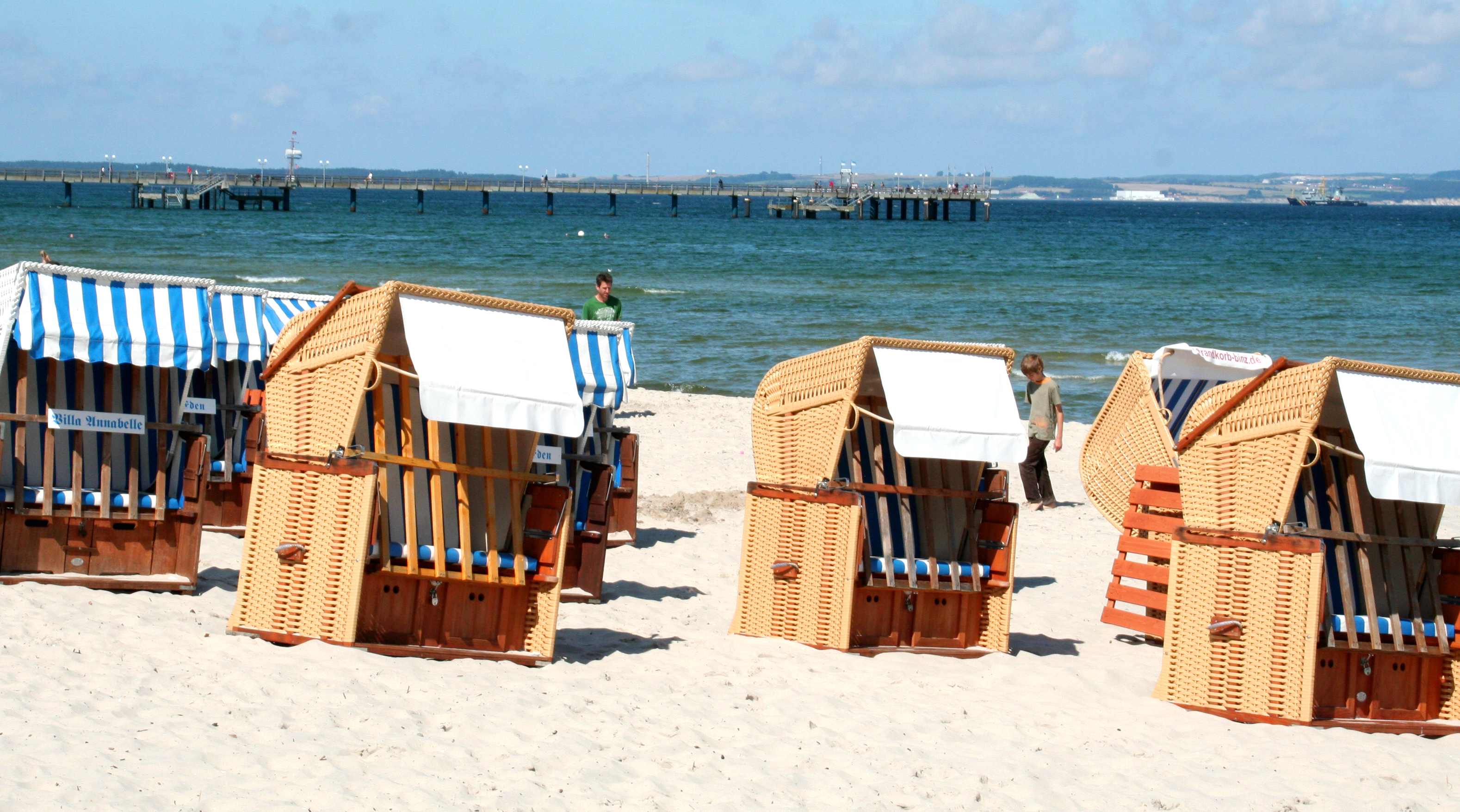
Rügen or Rugia is Germany’s largest island, located on the Baltic Sea. It is one of the most visited holiday destinations in Germany. We traveled almost the entire island and no doubt about it, Binz was the place to be. From the gorgeous mansion hotels to the darling beach cabanas (huts?) this was the busiest area of the island. We drove through Jasmund National Park in hopes of seeing the famous chalk cliffs but sadly there isn’t a way to see them without hopping on a bus or hiking for a few miles. I wouldn’t have minded a hike but my cute parents are getting older and it probably would have been too much for them. Maybe next time!

Please enjoy the beautiful island of Rügen:

Save

architecture · church · Germany · love love love · Road Trip · travel

EPRT II Stralsund, Germany

Old warehouse in the Stralsund harbor. You can see Rügen Island in the distance.

The next day we drove about six hours from Wesel to Stralsund, Germany. One of the main reasons for our road trip to the north of Germany and over to Poland was for my Mom’s family tree research. She has been really into this for many years and has made amazing strides in finding out so much of her and my ancestral background. Go MOM!

So, Stralsund. Stralsund is a Hanseatic town in northern Germany. During its history, it had to defend its independence against Lübeck (Germany), Denmark, Holland and Sweden. In the Thirty Years’ War, General Wallenstein vowed that he would take the town even if it was chained to heaven – but he failed. Subsequently, Lower Pomerania stayed under Swedish rule for 200 years until 1815, when it became Prussian. Despite its turbulent history, 811 protected buildings survived in the old town, among them some truly remarkable examples of architecture.

The town’s largest church, St. Mary’s (Marienkirche), which was built in 1383 – 1473, with an octagonal tower for seeing great views of Stralsund.

I thought this Milchbar (Milk Bar) building was super cool. I took about a bizillion pics of it.

As I mentioned above, my Mom is trying to find out more about our family tree. She has traced my Great x5 Grandparents to a tiny village called Müggenhall – we drove through it and it was one street, maximum 20 very old homes. But we went to the next town over and we were able to meet with the minister (Der Pfarrer) in the town of Franzburg. He gave us many books to look through but we couldn’t find anything that had information with the names that Mom was looking for. Nonetheless, I think Der Pfarrer was happy with Mom’s 50 Euro contribution for giving up an hour of his time to dig out these old books for us to look at.

Besides going to Müggenhall we also went to a small village about 45 minutes from Müggenhall where my Great x5 Grandparents went to work as servants at an estate. It was bigger than Müggenhall and the homes were more cared for, obviously a village with more money. We scoured the graveyard for Schulzs and actually found a few. This one was my favorite, though a bit strange because it was so small and on top of another cross. Was it a child?

And my obsession with graveyards continues…. with a new post! There was a large home with a farm and more that quite possibly could have been where my great great great great great (whew!) grandparents worked. Here was my favorite building from there, love the thatched roof!! Maybe my Gx5GP (please tell me you get that) slaved away in there making cheese or washing laundry or sneaking away for a nap.

Looks like a perfect place for a snooze. Zzzzzzzzzzzzzzzzzzzzzzzz…

Save

2011 · architecture · beauty · familia · Germany · love love love · Road Trip · travel

EPRT II Day One/Two

The EPRT II (European Parent Road Trip Part II) started off with us flying into Düsseldorf. Me, flying in from Mallorca, and my parents flying Phoenix – Chicago – Warsaw – Düsseldorf. Wasn’t sure about that whole extra stop for them until I looked at where dad bought his tickets – CheapO Air. Yup, that’s my Dad! Love him!

I had booked us a night at the Düsseldorf hotel Stage 47. We had the Maisonette Suite which was a lovely two-story room for the price of 170 euros. My roll away bed was about the skinniest thing you have ever seen but since I am skinny, we worked it out. A nice dinner at a Thai restaurant just down the street and then it was time to hit the sack.

The next day we headed towards Wesel, Germany. Felix’s parents have a gorgeous townhouse in the middle of the city. During World War II,as a strategic depot, Wesel became a target of Allied bombing. On the 16, 17 and 19 February 1945, the town was attacked with impact and air-burst bombs, which destroyed 97% of the city. Felix’s parents home is one of the few that survived. It is at least five stories tall with an incredible huge wooden staircase that runs through the middle of it. And his mom is such a great decorator she has made the entire place, including the backyard to the most sweetest, most comfortable home you would ever want to live in.

So, after kisses of hello, a glass of rosé champagne and a piece of strawberry cake we headed off towards Xanten.

Xanten is the only German  town whose name begins with an X. The history of Xanten goes back to the Romans, who founded the settlement of Colonia Ulpia Traiana in 15 BC. That is a reeeeeeaallly long time ago. But by 275 it was mostly destroyed by Germanic tribes. But nowadays it has been rebuilt within the Archäologischer Park to see how the town might have been. The Nühlens (Felix’s parents) said the park is an all day thing so we only went to the Römer Museum. And it had so much to see and you get (for a small fee) your own handset which tells about each area in museum, it works as a listening device but also has videos reenacting moments from that reeeaaallllyy long time ago.

Among the exhibits on display are the remains of a Roman boat, suspended from the ceiling at a height of 12 metres. Further highlights are a stunning, large mural and the oldest and best preserved Roman cannon yet discovered. Spanish oil amphorae, silver tableware, pottery and a considerable collection of Roman army weapons and equipment are also on display.

The parents at the Römer Museum in Xanten, Germany

After the museum we saw the cobblestone streets and the church in Xanten – all so very lovely. And then we headed towards the town of Kevelaer, Germany. The clouds were menacing and there was thunder in the distance but we were able to see the Chapel of the Candles and the Chapel of Grace. Two very beautiful and different things!

Xanten Dom

The Chapel of Grace is a very small but very richly decorated hexagonal building built in 1654. Hundreds of people come to pray at the chapel every day. Even the Pope has been there! The story about the building is interesting and unusual. I am only going to give the overview but if you are dying for more, go here for the full story.

A traveling salesman, Hendrik Busman in 1641 prayed at his usual spot where he heard a mysterious voice that said, “Build me a chapel on this spot”, which he then heard three other times on this same spot. By the way, all sites that I have read about this story claim he was a very sober man for those days. Which makes me laugh, did all drunks have the same voice echoing in their heads? Anyways, soon after Busman’s wife had a dream of a postcard offered for sale to her by two soldiers. She told her husband and he made he go find the card and buy it. That card is still there today. It was such a tiny place I never realized the importance of it until now.

And only a few steps away was the Chapel of Candles which you have hopefully already seen on my last post. Felix’s dad thought there were too many candles. But Felix’s mom and I disagreed. They were beautiful! They are kind of like shoes, you can never have too many.

Stay tuned for Stralsund and Rügen Island!

Save

2011 · beauty · church · cool photos · familia · Germany · Road Trip

Kerzenkappelle Kevelaer

Kevelaer is a municipality in the district of Kleve, in North Rhine-Westphalia  in Germany.  It is the best visited Catholic pilgrimage location within north-western Europe. More than 800,000 pilgrims, mostly from Germany and the Netherlands,  visit Kevelaer every year to honour the Virgin Mary.

This was one of the first stops for the Europe Parent Trip II Part One (could I make it any more confusing). Hundreds of lit candles of all sizes were in front of this chapel of the candles (kerzenkapelle). BEAUTIFUL! Plus a small shrine is built close by for the faithful to come and pray for healing.

My parents and I are still hitting the streets! My aunt and uncle arrive tomorrow, but I am back and posting now all of the gory details. Don’t forget to come back to check ’em out. Germany, Poland, Mallorca, Barcelona all coming to a blog near you.

Save